Tokenized real-world assets are the part of digital assets that traditional finance actually understands. A tokenized Treasury fund is still a Treasury fund. The blockchain changes how ownership is recorded and transferred, not what you own. That familiarity is why money market funds, private credit, and government bonds have moved on-chain faster than almost anyone predicted.
It is also why the category confuses people. The token looks like a cryptocurrency — it sits in a wallet, moves on Ethereum or Stellar, shows up in a block explorer. But it behaves like a security, because it is one. Buy it the way you would buy bitcoin and you will trip over transfer restrictions, allowlists, and transfer agents. Buy it the way you would buy a mutual fund and you will miss the operational work the token layer adds.
This guide walks through what tokenized real-world assets actually are, how the wrapper works legally, which token standards institutions rely on, and — because this is where most programs stumble — how custody differs from holding ordinary crypto. We wrote it for allocators, treasurers, and operations teams doing first-time diligence, and it pairs with our broader guide to institutional crypto custody.
What counts as a real-world asset on-chain
The label covers any token whose value comes from a claim on something that exists off-chain. In practice, institutional flows concentrate in a few buckets.
Tokenized cash and money market funds. The flagship products. BlackRock launched its USD Institutional Digital Liquidity Fund — BUIDL — on Ethereum in March 2024 with Securitize as the tokenization platform and transfer agent, and it became the largest tokenized fund within weeks. Franklin Templeton's OnChain U.S. Government Money Fund runs on public blockchains with each share represented by a BENJI token, and the firm has operated it since 2021 — the first US-registered mutual fund to use a public chain as an official record of ownership.
Tokenized Treasuries and bonds. Short-duration government debt wrapped for on-chain settlement, from single-bond structures to actively managed pools. The pitch is a yield-bearing instrument that settles in minutes and plugs into automated treasury operations.
Private credit and funds. Feeder funds for private equity and credit strategies issue tokens as the record of a limited partnership interest. Hamilton Lane, Apollo, and KKR vehicles have all appeared in tokenized form on established platforms.
Everything else. Real estate fractions, commodities, invoices, art. These generate headlines and pilot programs. The institutional money, so far, sits overwhelmingly in the first three buckets, where the underlying asset already has a deep market and a clear legal wrapper.
The common thread: the blockchain is the ownership ledger, but a legal structure — a fund, a note, a trust — connects the token to the asset. Which brings us to the most important idea in this entire topic.
A tokenized Treasury fund share is a fund share. Your rights come from securities law and the fund's documents, not from possession of the token. Somewhere behind every serious product sits a registrar or transfer agent — Securitize plays this role for BUIDL — maintaining the authoritative record of who owns what, with the blockchain functioning as that record or as a synchronized copy of it.
This distinction does real work. If your key is compromised, the story does not end the way it ends with bitcoin. The transfer agent can freeze the stolen tokens, void them, and reissue your position to a new address, because the legal record of ownership is what matters and the issuer controls the smart contract's administrative functions. Several major tokenized funds have exactly this recovery capability built into their contracts.
It also means diligence runs in two directions. You evaluate the underlying asset the way you always would — credit quality, duration, fees, redemption terms. Then you evaluate the wrapper: who is the transfer agent, which entity issued the token, what happens to the on-chain record if that entity fails, and whether redemptions settle in fiat, stablecoin, or in kind.
Token standards: why RWAs do not use plain ERC-20
Ordinary crypto tokens follow standards like ERC-20 that make every holder equal and every transfer unconditional. Securities cannot work that way. A fund restricted to qualified purchasers must block transfers to unverified wallets. A regulator-ordered freeze must be enforceable. A corporate action — a dividend, a split, a forced redemption — must be executable by the issuer.
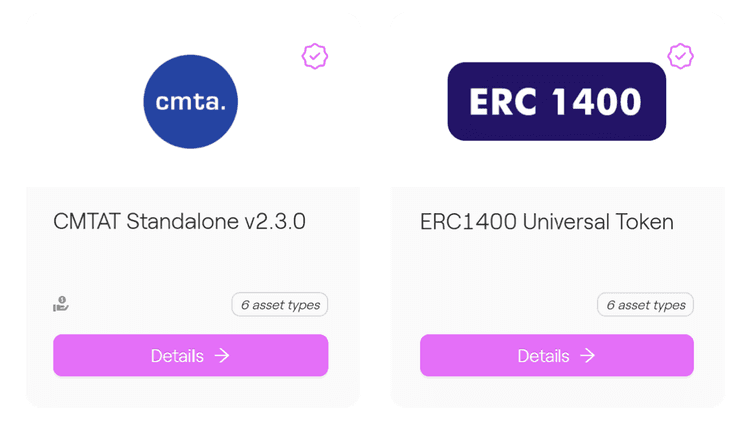
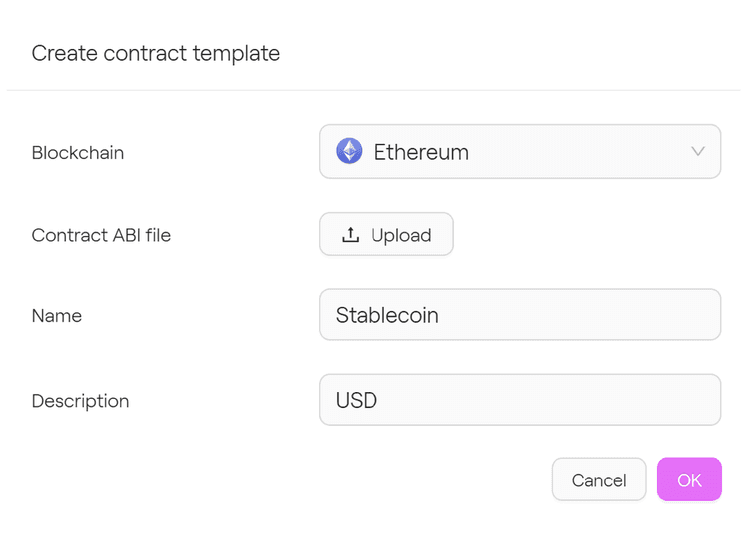
So real-world assets ship on restricted standards. ERC-1400 and its relatives add transfer controls, document references, and forced-transfer functions for regulated instruments on Ethereum-compatible chains. CMTAT, the standard maintained by Switzerland's Capital Markets and Technology Association, encodes issuer powers — pause, freeze, reissue — that map to Swiss ledger-based securities law. Tokenization platforms expose these as templates: pick the standard, configure the asset type, and the platform deploys an audited contract rather than bespoke code.
For a buyer, the standard answers a practical question: what can the issuer do to your position, and what can you do with it? Read the contract's powers the way you would read a fund's redemption gate provisions. An issuer who can freeze and reissue is a feature in a stolen-key scenario and a risk in a dispute. Both edges are real.
Distribution looks nothing like a crypto exchange listing. Access runs through onboarding: verify identity, confirm eligibility, and register your wallet address on the product's allowlist. Only allowlisted addresses can receive the token at all — send it anywhere else and the transfer simply fails at the contract level.
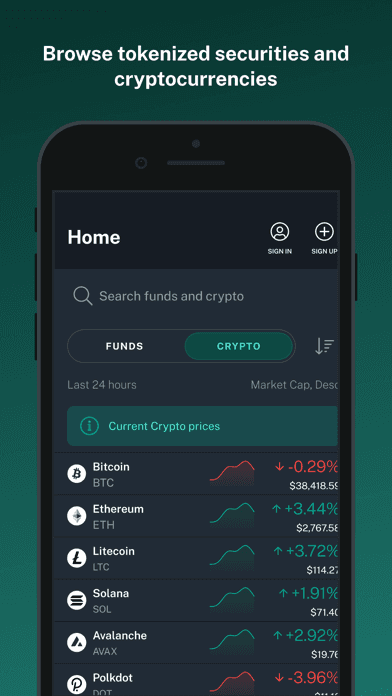
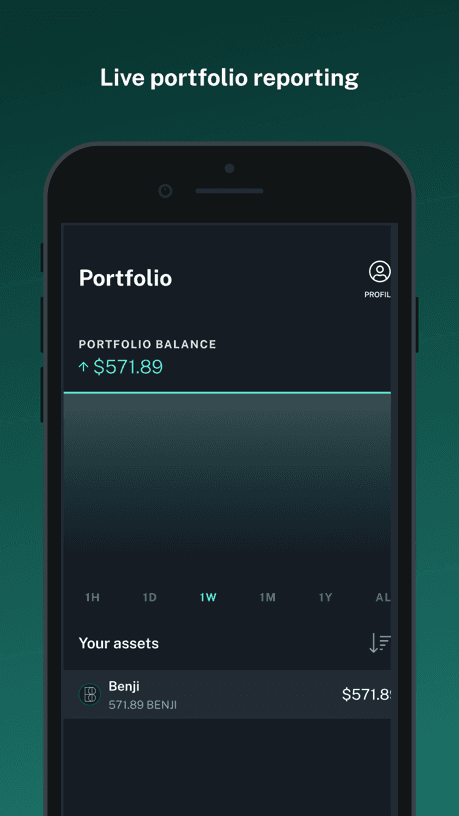
Franklin Templeton's Benji platform is the clearest public example of the full retail-to-institutional stack. The fund's shares exist as BENJI tokens; the app handles onboarding, purchases, and redemptions; and the investor sees a fund balance that happens to be a token position.
Institutional access works the same way at larger scale: the operations team registers custody addresses with the transfer agent, the addresses go on the allowlist, and subscriptions settle either in fiat through traditional rails or in stablecoin on-chain. The allowlist is why your custody setup has to be decided before you subscribe, not after — moving a position to a new custodian later means registering the new address and executing an on-chain transfer the issuer must permit.
More in Markets & Infrastructure
Custody: where RWAs differ from bitcoin
Everything in our guides to qualified custodians and bank-grade custody applies here — keys must be generated in hardware, governed by quorum policy, and held by an entity whose failure does not swallow your assets. But tokenized securities add three twists.
The custodian must support the standard. A custodian built for bitcoin and ether may not handle ERC-1400 transfer logic, respond correctly to a frozen token, or support the staking of a registered address on an issuer allowlist. Ask specifically which tokenized products the custodian has onboarded and whether it has processed a forced transfer or reissuance.
Recovery changes the risk model. Because the transfer agent can reissue, a lost key is an operational headache rather than a total loss — for the token. Your custody bar should not drop because of this; a compromised signing setup that leaks one asset leaks everything else it guards too. Governance — quorum approvals, allowlisted counterparties, multi-party computation custody or hardware sharding — still carries the real weight.
Self-custody is often not an option. Many products only permit custody at approved institutions, because the issuer's compliance obligations extend to knowing where the tokens sit. Your choice of custodian is therefore part of product eligibility, not an independent decision.
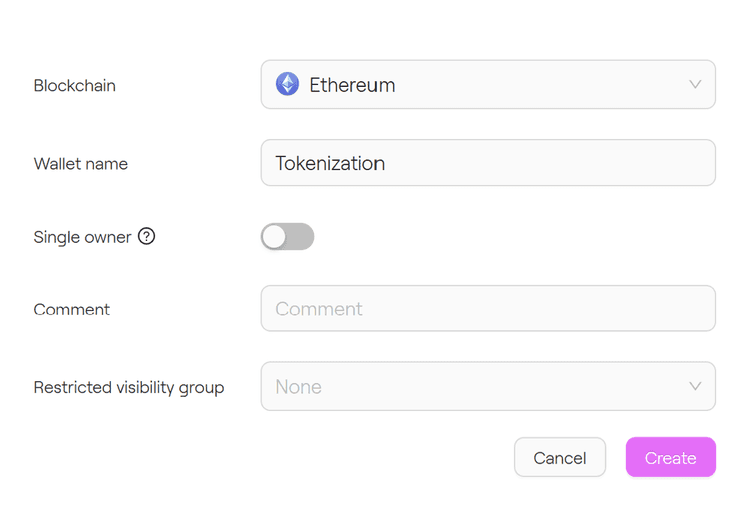
Understanding how the sausage is made pays off in diligence, because the issuance platform's controls are part of your product's integrity. On a bank-grade tokenization platform, minting a security token is a governed workflow, not a developer pushing a button.
A representative lifecycle: an operator creates the issuance request — asset, quantity, target contract. Designated approvers review and approve it under a quorum rule, the same four-eyes discipline that governs custody withdrawals. A hardware security module signs the transaction, so the issuing key never exists in software. The transaction is broadcast to the chain, and the platform waits for confirmation before updating the register.
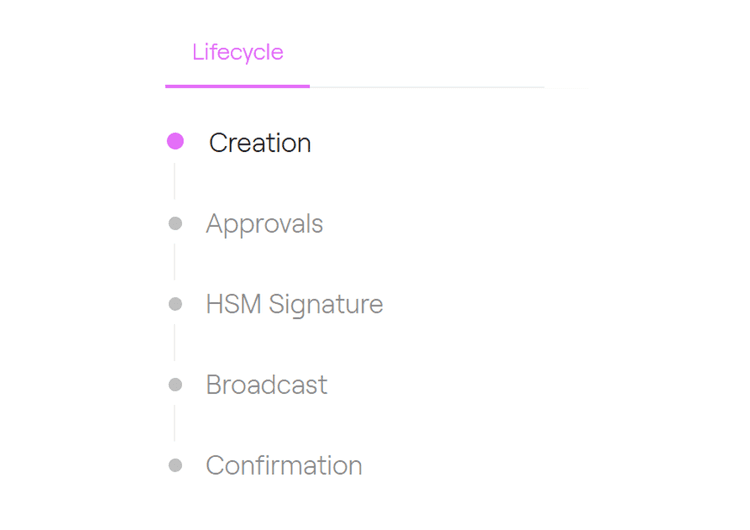
When you diligence a tokenized product, ask the issuer to describe this chain for their own mint and burn operations. An issuer who cannot explain who approves a mint, where the signing key lives, and how a mistaken issuance gets reversed is running a securities register on hope. The best issuers will walk you through their platform's audit trail without being asked twice.
The regulatory map
No single regime governs tokenized real-world assets; the wrapper inherits the law of whatever it wraps, plus some new plumbing rules.
United States. A tokenized fund share is a security, full stop. Registered funds file with the SEC like any other; private placements run under the usual exemptions with tokens as the record. The open questions are operational — which entities may act as qualified custodians for tokenized securities — rather than whether securities law applies.
European Union. Security tokens are MiFID financial instruments, explicitly outside MiCA's scope. The interesting piece is the DLT Pilot Regime — Regulation (EU) 2022/858, applicable since March 2023 — which lets licensed market infrastructures run trading and settlement systems directly on distributed ledgers under temporary exemptions from legacy plumbing requirements.
Switzerland. The DLT Act, fully in force since August 2021, created ledger-based securities: instruments whose authoritative register is the blockchain itself, with full effect under Swiss law. This is why Swiss platforms and standards like CMTAT punch above their weight in this market.
Bank capital. Under the Basel cryptoasset standard, tokenized traditional assets sit in Group 1 and are treated close to their conventional equivalents, while unbacked crypto lands in punitive Group 2. Banks can therefore hold and custody tokenized bonds far more cheaply than bitcoin — a quiet but powerful driver of which products banks build first.
Why institutions bother: yield, settlement, collateral
Strip the novelty away and three concrete benefits remain. Yield with faster settlement: a tokenized money market fund pays fund yield while settling transfers in minutes around the clock, which matters for treasury operations that currently park idle cash overnight because traditional settlement windows closed at 4 p.m. Collateral mobility: a token that settles instantly can move between counterparties as margin far faster than a fund share that takes a day to re-register, and derivatives venues have begun accepting tokenized fund shares as posted collateral. Operational compression: cap tables, distributions, and transfer records maintained on one shared ledger instead of reconciled across administrator, custodian, and broker systems.
How the three cash instruments actually compare, based on the product documents reviewed for this guide:
| Stablecoin | Tokenized money market fund | Traditional money market fund | |
|---|---|---|---|
| Legal form | Payment instrument | Fund security, token as record | Fund security, book entry |
| Yield to holder | Usually none | Fund yield | Fund yield |
| Settlement | Minutes, 24/7 | Minutes, 24/7 on-chain | Next business day, market hours |
| Who can hold it | Anyone with a wallet | Allowlisted, verified investors | Onboarded brokerage clients |
| Lost-key outcome | Funds usually gone | Freeze and reissue via transfer agent | Not applicable, no keys |
| Best used for | Payments, moving margin | Parked cash that should earn | Parked cash on legacy rails |
Weigh these against the honest costs: a second operational stack, wallet and key governance you did not previously need, a thinner secondary market than the unwrapped asset enjoys, and dependency on the issuer's tokenization vendor remaining solvent and competent.
- Identify the underlying and its wrapper. Fund share, note, or direct claim? Read the offering documents before the whitepaper — the whitepaper describes the plumbing, the offering documents create your rights.
- Name the transfer agent and registrar. Confirm which record is authoritative — the chain or the agent's books — and what happens to holders if the tokenization platform shuts down.
- Read the contract's issuer powers. Freeze, force-transfer, reissue: confirm they exist for recovery scenarios and understand who can invoke them and under what governance.
- Confirm custody eligibility. Get the issuer's list of supported custodians, then verify your custodian has actually onboarded this token standard and product, not merely the chain it runs on.
- Test the redemption path. Subscribe small, redeem small, and time both legs — including the fiat leg. Marketing settlement times and lived settlement times can differ by days.
- Map the failure modes. Issuer insolvency, transfer-agent outage, chain congestion, custodian failure. For each, write down which legal entity owes you what. If the answers require guessing, the product is not institution-ready.
Three situations, three answers
"We are a corporate treasury with idle stablecoin balances." Tokenized money market funds were practically built for you: on-chain cash becomes yield-bearing regulated fund shares without leaving the settlement rails your operations already use. Your diligence should focus on redemption speed during stress and on whether your custodian supports the specific fund's allowlist process.
"We are a fund allocator who wants private credit exposure with cleaner operations." Tokenized feeders can compress subscription paperwork and give you a live position record, but the underlying remains illiquid and the token's transferability is usually tightly restricted. Treat the token as an operational improvement on the same investment, never as added liquidity.
"We are a bank or broker evaluating what to offer clients." Start from Basel Group 1 products — tokenized funds and bonds — where capital treatment is manageable and the custody stack overlaps with what a bank-grade custody program already runs. The tokenization platform decision (build, buy, or partner) matters more than the first product decision.
Evaluating the token instead of the asset. The chain, the standard, and the platform are wrapper questions. If the underlying credit or fund is weak, tokenization makes a bad investment settle faster.
Assuming crypto custody covers it. Support for Ethereum is not support for a restricted token on Ethereum. Custodians must handle the standard's transfer logic and the issuer's allowlist process, and many otherwise strong custodians have not built this.
Ignoring the off-chain record. In most products, the transfer agent's register is what a court will look at. Know whether the chain is the record or a reflection of it before you rely on on-chain data for reconciliation.
Sizing positions off headline liquidity. Secondary markets for tokenized securities remain thin. Redemption through the issuer is the real exit; size positions to that path, not to a hoped-for secondary bid.
Frequently asked questions
Are tokenized real-world assets securities?
In nearly every institutional product, yes — deliberately so. The token is designed as the record of a security, and issuers structure offerings under existing securities law rather than trying to avoid it. That is precisely what makes the products usable by regulated buyers.
What happens if I lose the private key to a tokenized fund position?
For most major products, the transfer agent can freeze the tokens at the lost address and reissue your position to a new registered wallet, because the legal ownership record survives the key. Expect identity verification and paperwork, not a shrug — but not a total loss either.
Can tokenized assets be self-custodied?
Sometimes, but many institutional products restrict holding to approved custodians or allowlisted verified wallets. Even where self-custody is permitted, the operational bar — hardware key management, quorum governance — is the same one any institutional holding demands.
What is the difference between a stablecoin and a tokenized money market fund?
A stablecoin is a payment instrument that targets a fixed price and typically pays no yield to holders. A tokenized money market fund is a security that pays fund yield and settles like a token but requires eligibility and onboarding. Treasuries increasingly use the fund for parked cash and the stablecoin for payments.
Which blockchains do institutional RWA products use?
Ethereum dominates institutional issuance, with products also live on Stellar, Avalanche, Polygon, and several permissioned ledgers. Serious platforms are multi-chain: the chain is a deployment detail governed by the issuer's compliance and settlement needs, not an ideological commitment.
Sources
- BlackRock, "BlackRock Launches Its First Tokenized Fund, BUIDL, on the Ethereum Network" — March 20, 2024.
- Regulation (EU) 2022/858 on a pilot regime for market infrastructures based on distributed ledger technology — May 30, 2022, applicable March 23, 2023.
- Franklin Templeton, "Franklin Templeton Launches First U.S. Registered Mutual Fund Using a Public Blockchain" — April 6, 2021.